

Artificial intelligence can generate text, create images, analyse data, and automate repetitive tasks within seconds. Yet, one skill continues to stand out across industries, creative thinking.
Businesses are no longer looking for professionals who can simply follow instructions. They want people who can generate original ideas, solve unfamiliar problems, adapt to change, and identify opportunities that machines cannot recognise on their own. Whether it’s designing a digital product, developing a marketing campaign, improving a customer experience, or creating an innovative business solution, creative thinking has become a competitive advantage.
For students preparing for future careers, understanding Creative Thinking Techniques is no longer limited to designers or artists. It is becoming an essential skill in technology, business, healthcare, education, engineering, entrepreneurship, and many other fields.
What is Creative Thinking?

Creativity is often misunderstood as something reserved for artists, writers, or musicians. That belief is incorrect. Creative thinking is a cognitive superpower that every human uses to navigate uncertainty, solve problems, and make decisions when there is no clear path.
It is the ability to look at the same information everyone else sees but notice a different pattern. Two people can face the same situation, but the one using creative thinking sees an alternative route.
This ability has become even more important today. Machines and AI can process data faster than humans, but they still struggle to produce original ideas that break patterns. Creative thinking is now the human edge. It allows individuals to adapt, invent, and respond when rules no longer apply.
Why Modern Careers Demand These Skills
The world is in constant change, with new technology being developed every year. The business environment is changing fast. In this changing world, knowledge alone is not enough for a person. A person needs to interpret information and complex situations and come up with practical solutions. Critical thinking helps in accurately analysing a problem. Creativity helps in developing new ideas for solving a problem. In the world today, employers need a workforce with these skills. Employers need a workforce with more to offer than just the job itself. Employers need a workforce with more to offer in the form of ideas for improvement. The above shift in requirement is what has called for skill-based learning in educational institutions.
Creative Thinking Techniques That Employers Value


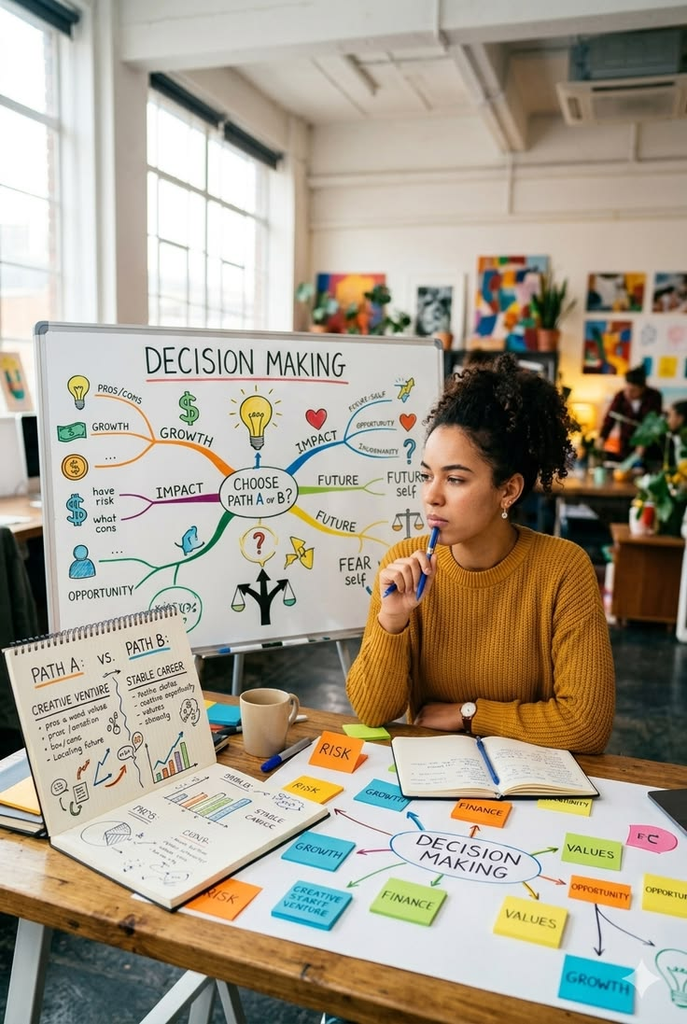
Creative thinking is not based on random inspiration. Professionals use structured techniques to analyse problems, generate ideas, and test solutions.
1. Brainstorming
Brainstorming encourages teams to generate multiple ideas without judging them too early. By exploring different possibilities first, organisations often discover innovative solutions that may not emerge through conventional thinking.
2. Design Thinking
Design Thinking focuses on understanding people’s needs before developing solutions. It combines empathy, research, ideation, prototyping, and testing to solve real-world problems, making it widely used in design, technology, healthcare, and business innovation.
3. Mind Mapping
Mind mapping helps organise ideas visually by connecting related concepts around a central problem. This technique encourages broader thinking and often reveals opportunities that linear note-taking may overlook.
4. Reverse Thinking
Instead of asking how to solve a problem, reverse thinking asks how the problem could become worse. Analysing these answers often reveals hidden challenges and inspires more effective solutions.
5. SCAMPER Technique
The SCAMPER framework encourages professionals to improve existing ideas by asking whether they can Substitute, Combine, Adapt, Modify, Put to another use, Eliminate, or Reverse different aspects of a product, service, or process.
These techniques demonstrate that creativity is a structured skill that can be learned, practised, and applied across professional environments.
Why Creative Thinking Will Continue to Matter

As artificial intelligence becomes more capable, many routine tasks will continue to be automated. However, AI still depends on human direction, context, and judgment to solve complex problems.
Professionals who combine creativity with analytical thinking, collaboration, and adaptability will be better equipped to work alongside emerging technologies rather than compete with them.
The future belongs to individuals who can ask better questions, connect unrelated ideas, and create solutions that deliver meaningful value.
Common Mistakes That Hold Back Creative Thinking in Students
Treating Creativity as a One-Off Event
Scheduling a single “creative project” per term and treating the rest of learning as rote sends the message that creativity is a bonus, not a core skill. Educators must weave it consistently across subjects and lessons.
Over-Structuring Creative Tasks
Adding too many constraints, grading rubrics for “correctness,” or narrowing problem parameters defeats the purpose. Tasks must preserve genuine openness. Educators need to actively calibrate the balance — enough structure to scaffold, enough freedom to actually create.
Skipping the Feedback and Reflection Loop
Many educators run creative activities but don’t build in time for students to reflect on their own process or receive targeted feedback. Without this loop, students repeat the same patterns instead of growing as creative thinkers. A complete feedback cycle includes:
- Self-evaluation of what worked and what didn’t
- Peer critique focused on process, not just the final output
- Targeted educator feedback that builds on both
How to Improve Creative Thinking



In learning environments like international curriculum schools in whitefield bangalore, creative thinking improves when students develop the right mindset and practice structured techniques. Schools and parents can support this by encouraging idea exploration, visual thinking, and allowing time for reflection.
Building the Right Creative Mindset
The way adults respond to a child’s idea affects whether the child continues sharing ideas or stops. A quick rejection can make children withdraw. However, a patient response can help them stay engaged and keep thinking on the scenario they are tackling.
Replace “No, because” with “Yes, and”
Classroom discussions often begin with simple suggestions from students. A response like “Yes, and what can we add to this?” keeps the idea moving forward. Children start listening to each other more carefully. They begin adding, changing, and improving ideas together. Over time, they understand that ideas can grow through discussion instead of ending immediately.
Accept Mistakes as Part of Learning
Mistakes give children useful information about what did not work. When mistakes are treated calmly, children remain willing to try again. Less hesitation appears when they face a new problem. Greater effort becomes visible because fear of being wrong reduces. Children begin focusing more on improving their work instead of avoiding difficulty.
Challenges in Developing Creative Thinking
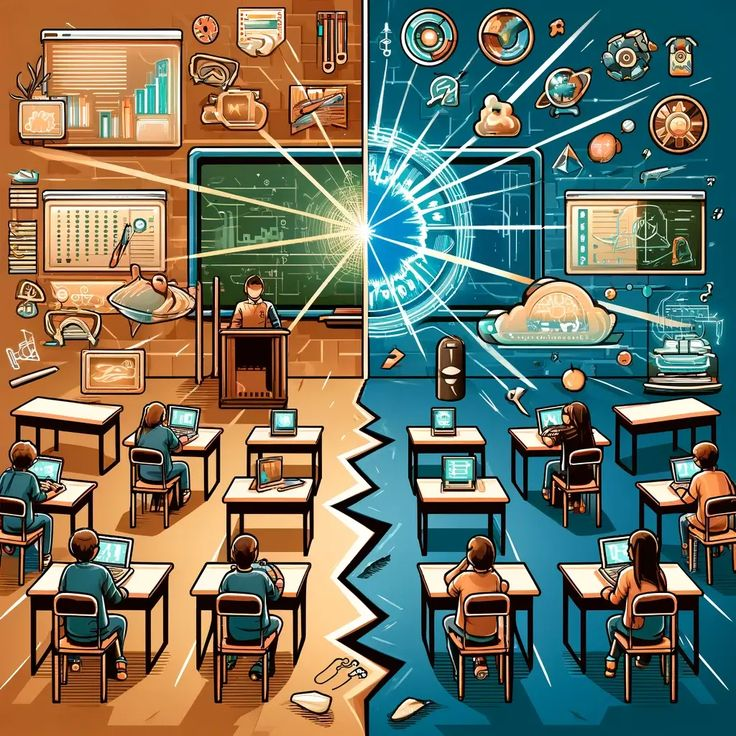
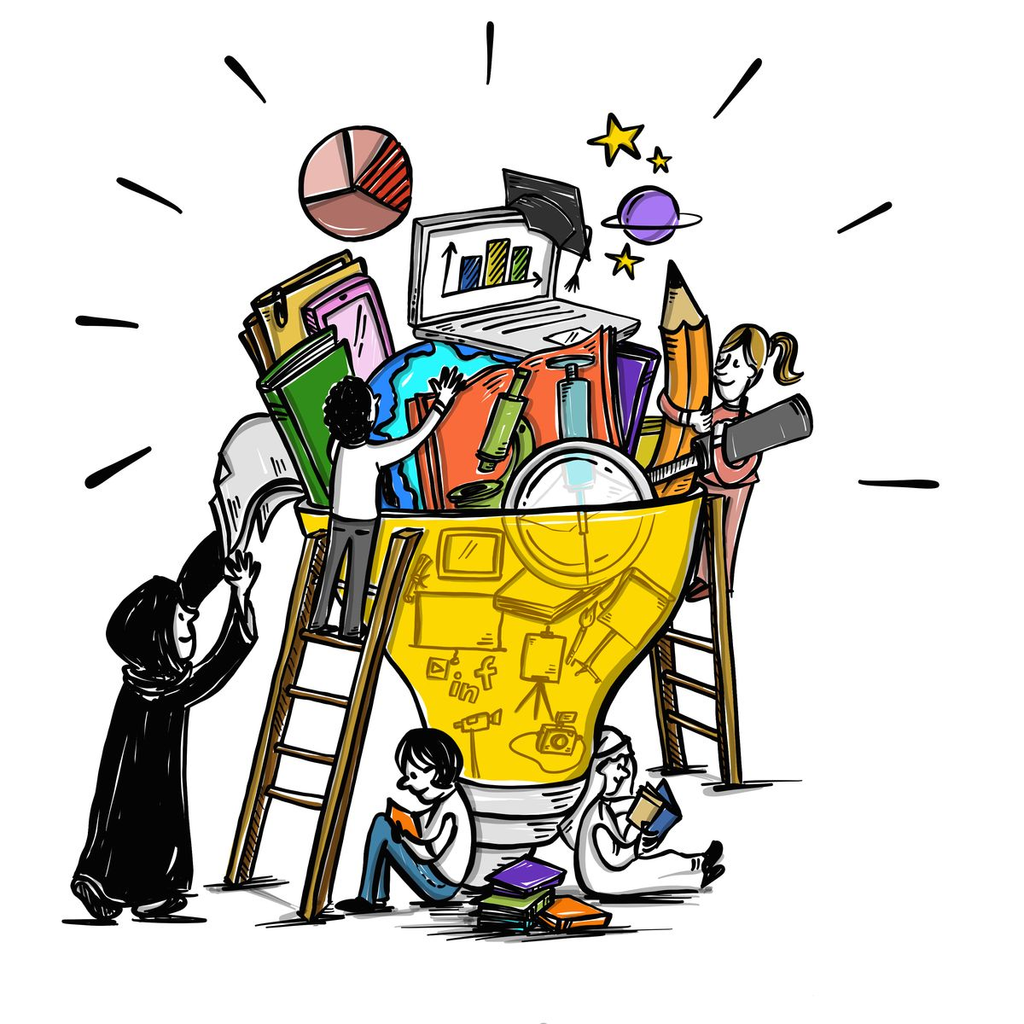

Creative thinking does not disappear suddenly. It reduces gradually when children are not given the right environment to question, explore, and experiment. Several psychological and educational factors influence this decline over time.
Creative thinking can be reduced over time when students are not given the right environment to explore and express ideas. Research and educational patterns show that certain psychological and academic factors gradually limit a student’s natural creative abilities.
The Creative Cliff Effect
A well-known NASA study by George Land and Beth Jarman showed that 98 percent of five-year-olds tested at a creative genius level. By age ten, this dropped to 30 percent. By age fifteen, it dropped further to 12 percent. In adults, only 2 percent remained at that level. This shows that creativity is not something children lack, but something that declines from their psyche when they grow up in environments that focus more on correct answers rather than idea exploration.
Fear of Social Judgment
Many students are hesitant to express their ideas due to their fear of being judged or providing the incorrect answer. This is known as the Spotlight Effect, in which people believe others are constantly evaluating them. Over the years, this fear causes students to avoid taking risks, limiting their willingness to propose novel ideas or investigate alternative solutions.
Education System Limitation
Traditional standardized testing focuses on accuracy and selecting the correct answer. Creative answers that do not match expected responses are often marked wrong. This trains students to avoid experimenting and instead focus on giving safe, acceptable answers. As a result, students begin to prioritize correctness over originality.
Fixed Mindset About Creativity
Some children come to see creativity as a special strength that shows differently in each person. Experiences in early years, classroom moments, and feedback shape how they view their own ideas. Familiar methods often feel comfortable, so children may return to them more often. However, with gentle encouragement and the right opportunities, we can influence them to explore new approaches. And gradually, with greater self-trust develops in their own thinking, and creative ability becomes more visible through regular use and practice.
The Connection Between Critical Thinking and Creativity
Some individuals think that these two skills can be used independently of each other. However, the truth is that these two skills complement each other quite closely. Critical thinking is the evaluation of ideas, and creativity is the generation of these ideas. When both skills are used in concert, individuals can come up with balanced answers. This is because creativity generates possibilities, and critical thinking ensures that these possibilities remain viable. It is through the joint functions of these skills that professionals can be creative and solve problems in an intelligent way.
FAQ’s
1. What are creativity skills?
Creativity skills help you generate original ideas, explore possibilities, solve problems, and approach situations from different perspectives.
2. Why are creativity skills important in 2026?
Creativity helps people adapt to changing workplaces, use new technologies effectively, and develop innovative solutions to complex problems.
3. How can I improve my creativity?
Practice brainstorming, explore new subjects, ask questions, try different approaches, and regularly challenge yourself with creative activities.
4. Can creativity be learned?
Yes, creativity can be developed through practice, experimentation, curiosity, and exposure to different ideas and experiences.
5. What is the difference between creativity and innovation?
Creativity focuses on generating new ideas, while innovation involves applying useful ideas to create value or solve problems.