

There are some facts you remember for years even though you never actually tried to memorize them.
Maybe someone once told you something strange about space. Maybe you discovered why an everyday object was designed in a particular way. Or perhaps you read a tiny piece of history that completely changed the way you looked at a familiar place.
That’s what makes learning interesting.
It doesn’t always have to happen in a classroom, through a long book, or during a serious study session. Sometimes, learning begins with a simple question:
One question leads to another, and before you know it, you’ve learned something you didn’t even realize you wanted to know.
That is the idea behind Knowledge Bites 2026—small pieces of information, useful insights, fascinating facts, and everyday explanations that make the world a little more interesting.
Some will be practical. Some will be surprising. Some may simply give you something interesting to talk about.
And honestly, not every fact needs to have a practical purpose.
Sometimes it is enough to think, “That’s actually pretty cool.”
What Exactly Is a Knowledge Bite?

A knowledge bite is a short piece of information that teaches you something without requiring you to spend hours studying it.
It could be a fact about history.
A quick explanation of a scientific phenomenon.
A surprising detail about another culture.
An interesting idea from psychology.
A technology concept you have always wondered about.
Or even the story behind an ordinary object sitting on your desk.
The best knowledge bites have one thing in common: they make you curious.
You read something and suddenly want to know more.
That’s a good thing.
Curiosity is often where meaningful learning begins.
Why Do We Enjoy Interesting Facts So Much?
Think about the last time someone told you a genuinely surprising fact.
You probably didn’t respond with, “Thank you for this educational information.”
You probably said something closer to:
“Really?”
Then came the questions.
“How?”
“Why?”
“Since when?”
“Who figured that out?”
That’s the fun part.
An interesting fact can interrupt an ordinary conversation and make you look at something differently.
It can also make information easier to remember. A surprising story or unusual example often sticks in your mind much longer than a list of disconnected facts.
Science Is Happening Around You All the Time

You don’t need to visit a laboratory to experience science.
It is happening while you cook dinner, charge your phone, watch the weather, make coffee, travel to work, or simply walk outside.
The more you notice it, the more interesting ordinary life becomes.
Why Does Ice Float?
You’ve probably dropped an ice cube into a drink countless times without thinking about it.
It floats because solid water is less dense than liquid water.
That sounds like a small scientific detail, but it matters in nature too. When water freezes, the ice forms at the surface rather than simply sinking to the bottom.
That means bodies of water can have an insulating layer of ice while liquid water remains underneath.
A glass of ice water doesn’t look like a science lesson.
But it is.
Your Brain Is Doing More Than You Realize
Your brain is responsible for an enormous range of processes.
It helps you interpret what you see and hear, form memories, make decisions, control movement, respond to your surroundings, and regulate many functions you don’t consciously think about.
The interesting part is that we are still learning about the brain itself.
In other words, the organ we use to study the world is also an object of scientific investigation.
There’s something wonderfully strange about that.
Space Makes “Big” Feel Like a Small Word
We use words like “huge” and “massive” all the time.
Then you start reading about the universe, and those words suddenly don’t seem sufficient.
Stars, planets, galaxies, nebulae, and other astronomical objects exist across distances that are difficult to picture using everyday experience.
One especially fascinating idea is that when astronomers observe extremely distant objects, they’re seeing light that began traveling a very long time ago.
So looking into deep space also means looking into the past.
That makes the night sky more than something beautiful to look at.
It’s also a record of earlier moments in the universe.
Everyday Objects Have Stories Too
One of the easiest ways to become more curious is to stop taking familiar objects for granted.
Look around your room.
A zipper.
A light switch.
A mirror.
A keyboard.
A door handle.
A pair of glasses.
You probably use these things without wondering how they came to exist.
But every one of them has a story.
Why Do Traffic Lights Use Different Colors?
Red, yellow, and green are so familiar that most people never stop to question the system.
Red is associated with stopping, green with proceeding, and yellow with caution or transition.
The system works because colors create a simple visual language that can be understood quickly.
What looks like three colored lights is actually an example of how design, communication, safety, and standardization can work together.
And once you notice that, you start seeing similar visual systems everywhere.
History Isn’t Just About Dates

History can feel boring when it is presented as a list of names and years.
But real history is much more interesting.
People had meals. They traveled. They argued. They traded. They built homes. They invented tools. They celebrated festivals. They raised families. They worried about money. They tried to solve everyday problems.
In other words, they lived ordinary lives in extraordinary circumstances.
Ancient People Were Problem Solvers
It is easy to look at ancient civilizations from a modern perspective and focus on what they didn’t have.
No smartphones.
No modern engines.
No computers.
No electricity as we know it.
But that doesn’t mean people in the past lacked sophisticated knowledge.
They developed methods for farming, construction, mathematics, navigation, writing, trade, and organizing societies.
They solved difficult problems using the tools and knowledge available to them.
That is worth remembering.
Technology changes.
Human curiosity doesn’t.
The Past Is Still Around Us
Look at architecture.
Listen to language.
Try a traditional recipe.
Visit an old neighborhood.
You will often find pieces of history hiding inside things that feel completely modern.
A word can have centuries of history behind it.
A building style can come from another era.
A food tradition can reflect migration, trade, climate, or religion.
History isn’t always sitting inside a museum.
Sometimes it is sitting on your dinner plate.
Geography Changes More Than Maps
Geography is often taught as countries, capitals, mountains, and rivers.
But it is much more than memorizing names.
Geography helps explain why cities developed in particular locations, why people settle near certain resources, and how landscapes influence transportation, agriculture, weather, and culture.
Rivers Have Shaped Human Life
Rivers have historically provided water, fertile land, transportation routes, and opportunities for trade.
That helps explain why many important settlements developed around major waterways.
A river can influence far more than the landscape.
It can influence where people live, what they grow, how they travel, and how communities interact.
Mountains Can Influence Entire Regions
A mountain range can affect weather, water availability, transportation, agriculture, and settlement.
So when you look at a mountain on a map, you’re not just looking at a tall piece of land.
You are looking at a feature that can influence life across a much larger area.
Technology Is Changing Everyday Life
Technology has a funny way of becoming invisible once we get used to it.
A few years ago, something may have felt futuristic.
Now we use it without thinking.
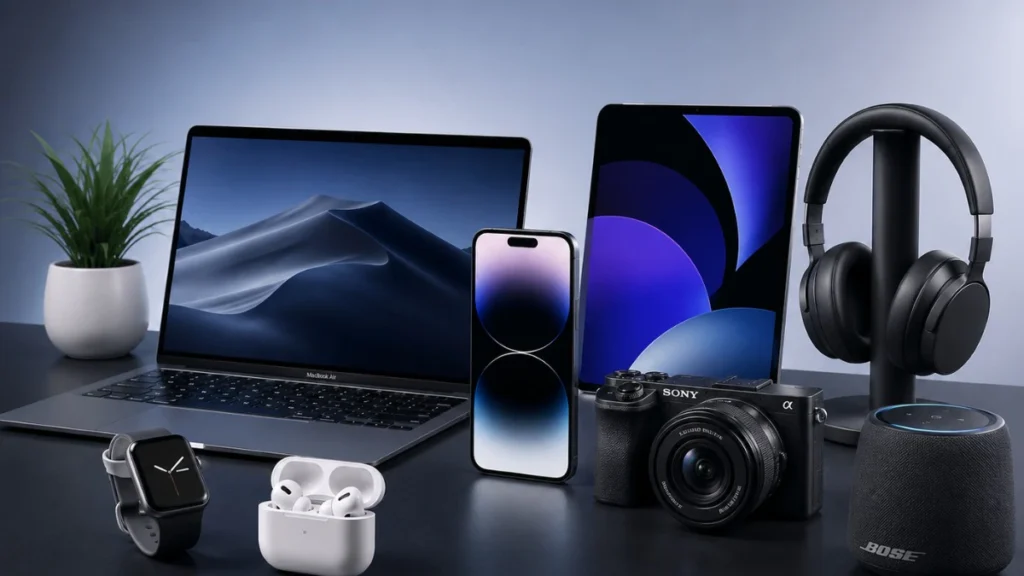
Smartphones are a perfect example.
A modern phone can handle communication, navigation, photography, entertainment, payments, scheduling, shopping, reading, and much more.
We rarely stop to appreciate how many separate tools have been combined into one small device.
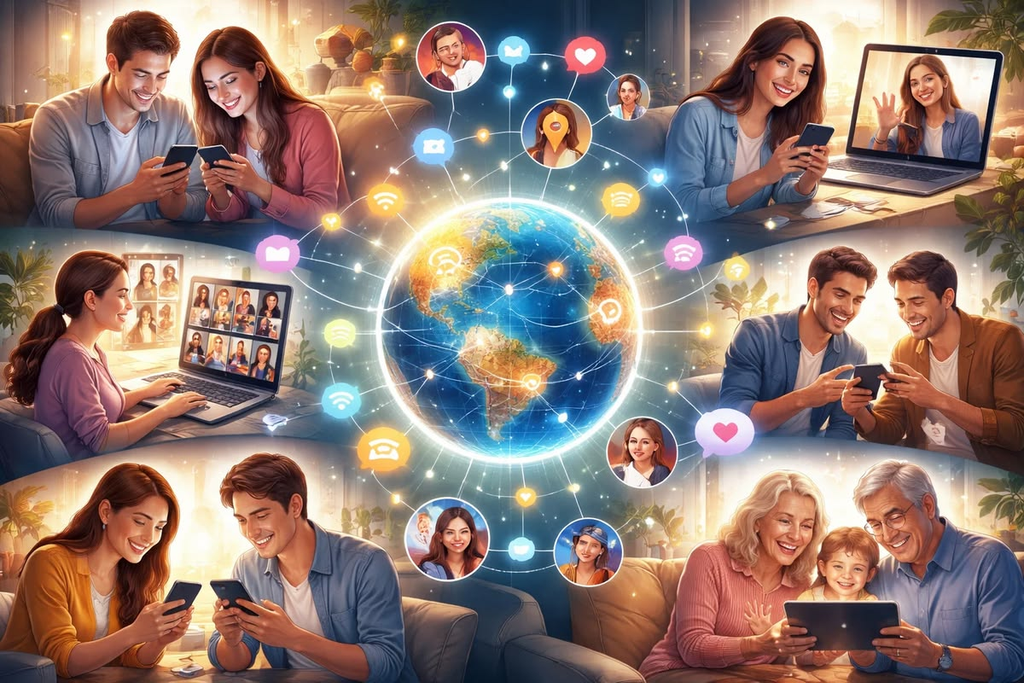
The Internet Is Bigger Than Social Media
For many people, “the internet” immediately means social media, video platforms, online shopping, or messaging.
But those are only parts of a much larger system.
The internet supports websites, cloud services, online banking, education platforms, business systems, communication tools, streaming services, databases, and countless other activities.
Most of the infrastructure is invisible to ordinary users.
And that’s probably why it feels almost magical when it works.
You tap a button, and information from somewhere else appears almost instantly.
Behind that simple moment is a huge amount of technology.
Food Can Teach You About the World
Food is one of the easiest ways to connect with history and culture.
A dish can tell you about the ingredients available in a region, the climate, migration, trade, traditions, and the people who prepared it over generations.
That’s why trying a new food can sometimes feel like a small cultural lesson.
Taste Is More Complicated Than It Seems
When you eat something, your experience isn’t based only on your tongue.
Smell plays an important role in how you experience flavor.
Texture matters too.
Temperature matters.
Appearance can influence expectations.
Even memories and emotions can affect how you experience food.
That is why the same dish can feel completely different depending on the situation and the person eating it.
Psychology Explains Some Everyday Behaviors
Human behavior can be surprisingly complicated.
Why do we procrastinate?
Why do certain songs remind us of specific moments?
Why are some habits difficult to break?
Why can a small compliment stay in someone’s memory for years?
Psychology explores questions like these.
Habits Become Easier Through Repetition

A behavior that you repeat regularly can eventually become part of your normal routine.
That’s one reason habits can be both useful and difficult to change.
If you want to develop a new habit, making it easy to start can help.
Want to read more?
Keep a book beside your bed.
Want to walk more?
Take a short walk after lunch.
Want to remember important tasks?
Keep a simple list where you can see it.
Sometimes changing your environment is easier than trying to rely on motivation every day.
FAQ’s
1. What are Knowledge Bites?
Knowledge Bites are short, interesting pieces of information that make learning simple, quick, and enjoyable.
2. What topics can Knowledge Bites cover?
They can cover science, history, technology, geography, psychology, food, culture, nature, space, and everyday life.
3. Why are interesting facts useful?
Interesting facts can improve curiosity, help you understand everyday things, and give you new topics to explore or discuss.
4. Can I learn something new every day?
Yes. Reading a short article, exploring a new topic, or asking questions can turn everyday moments into learning opportunities.
5. Are Knowledge Bites suitable for everyone?
Yes. They can be useful for students, professionals, curious readers, and anyone who enjoys discovering new information.

One thought on “Knowledge Bites 2026: Interesting Facts, Useful Insights & Things to Know”