

He technology story of 2026 has moved off the screen and into the physical world. Innovation is accelerating in the power grids and chips that underpin the data center boom; in the intelligent robots that embody AI; in the agentic systems discovering new chemical compounds; and in the launch pads sending thousands of satellites into orbit.
AI needs energy to scale. That’s one reason energy technologies alone drew nearly $200 billion in investment in 2025, among the highest capital influx in any technology domain. And spending on AI infrastructure doubled in a single year. These developments show that the defining questions today are not only about what technology can do. They are also about who can build the hardware and assemble the skilled workforce to deploy AI in the real world. At the same time, huge leaps were made in cybersecurity and software development—illustrating that AI is accelerating the digital frontier,
These developments show that the defining questions today are not only about what technology can do. They are also about who can build the hardware and assemble the skilled workforce to deploy AI in the real world. At the same time, huge leaps were made in cybersecurity and software development—illustrating that AI is accelerating the digital frontier, too.
McKinsey’s Technology Trends Outlook 2026 examines 14 technology trends that define 2026, expanding our coverage from last year to include two new fast-emerging domains: agentic software development and AI for scientific discovery and engineering. For easier navigation, we group the trends into three broader categories: AI revolution, compute and connectivity frontiers, and cutting-edge engineering. The lines between these domains are blurring, and much of the innovation is happening in the gaps.
Machines are being given more autonomy
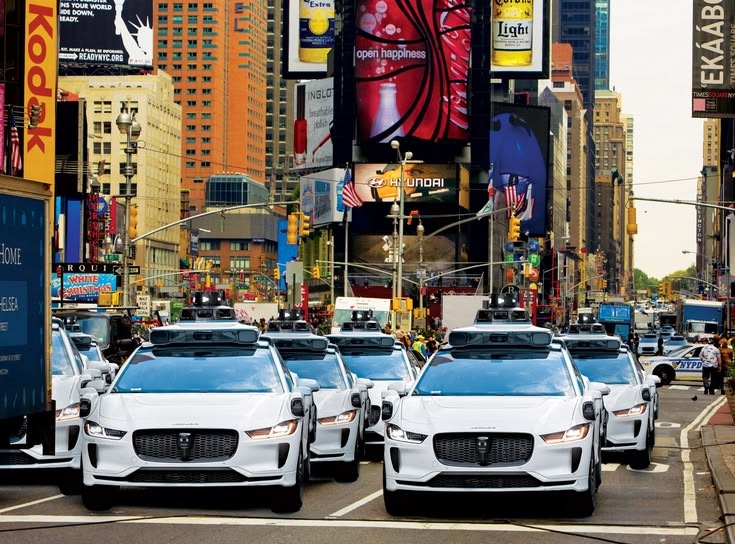
AI has already transformed screen-based workflows—generating answers, drafting documents, and summarizing calls—and is rapidly advancing into an agentic era, in which it will complete many end-to-end digital tasks on its own. Agentic AI is becoming the connective tissue of the enterprise, with agents working alongside humans, changing not just tools but operating models. Physical AI is the next frontier. Making the jump to the real world, AI is adding perception, reasoning, and action across robotics, mobility, and wearables. General-purpose robots are being trained to learn about their environments so they can execute complex tasks and navigate unpredictable environments. Vehicles can make real-time decisions without drivers. Industrial systems can produce complex goods inside “dark factories” with no humans present. And immersive-reality headsets are interacting in real time with both wearers and the outside world. Physical AI is arriving first in manufacturing and logistics, where the economics are clearest. But the trajectory points well beyond the factory floor, toward hospitals, construction sites, farms, and city infrastructure.
The cyber defense window has compressed
How relevant and useful is this article for you?
Most Popular Insights
- What to read next: McKinsey’s 2026 annual book recommendations
- Is that AI agent worth it? Agentic economics and the modern operating model
- Building expertise in the age of AI: Who trains the next generation?
- The state of AI in 2025: Agents, innovation, and transformation
For decades, the cat-and-mouse game of cybersecurity played out over days and weeks, giving defenders time to find and fix vulnerabilities before attackers could fully exploit them. AI has eliminated that buffer. More than three-quarters of all cybersecurity vulnerabilities are currently classified as “zero day,” meaning that by the time they are publicly disclosed, an exploit has already been developed.1 Thus, while AI is helping security teams find and fix vulnerabilities faster, it is also helping attackers find and exploit them faster. Anthropic’s handling of Claude Mythos Preview reflects this duality. The model identified thousands of potential security flaws. So rather than release the model publicly, Anthropic gave a limited group of defenders gated access through Project Glasswing to identify, validate, and patch the vulnerabilities
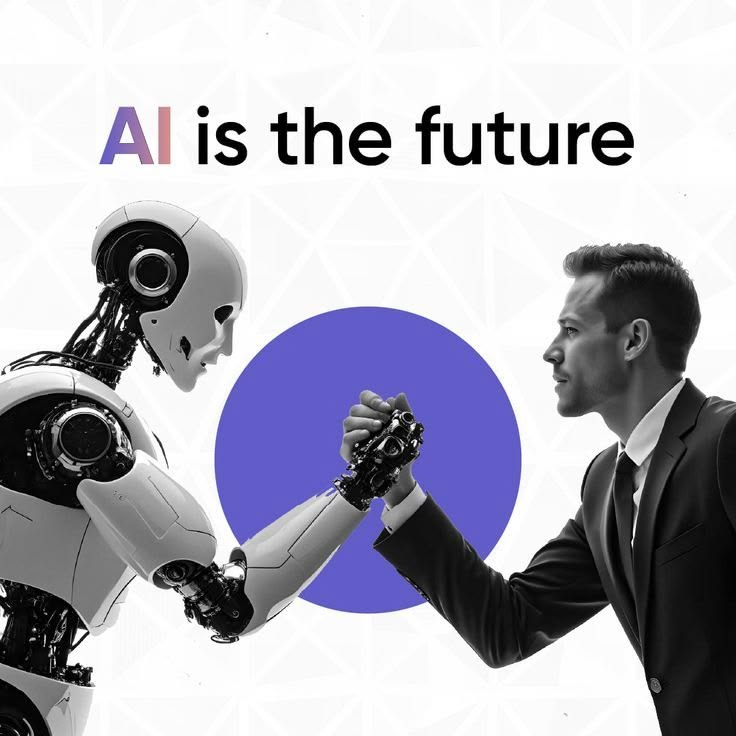
In 2026, disruption is accelerating and AI is no longer optional. At the 2026 Gartner IT Symposium/Xpo, Distinguished VP Analyst Gene Alvarez and VP Analyst Tori Paulman emphasized that this year’s top strategic technology trends are more than emerging innovations — they are essential tools for CIOs and IT leaders to build resilient foundations, orchestrate intelligent systems and protect enterprise value.
These 10 trends reflect how leading organizations are responding to complexity and opportunity in an AI-powered, hyperconnected world:
- AI-Native Development Platforms
- AI Supercomputing Platforms
- Confidential Computing
- Multiagent Systems
- Domain-Specific Language Models
- Physical AI
- Preemptive Cybersecurity
- Digital Provenance
- AI Security Platforms
- Geopatriation
Download the 2026 Top Strategic Technology Trends eBook
Stay ahead of disruption with Gartner’s latest insights on the technologies shaping enterprise strategy through 2030. This eBook explores the 2026 trends across three strategic themes and offers guidance for CIOs and IT leaders on how to prioritize, plan and act.
Brand building with AI: human connection through machine selection
Next year, purchase decisions will be increasingly mediated by Generative AI and agents, who will recommend brands and their content. But (for now) technology doesn’t buy things, people do. So, the CMO’s job is to build brands that people love, and to be more present so that models prioritise their brands.
Salience alone won’t make you algorithmically preferred. Three-quarters (74%) of those who use AI assistants (Kantar’s Connecting with the AI consumer report) regularly seek out AI-driven recommendations. Enter Generative Engine Optimisation (GEO), the new SEO. GEO gets your brand cited and trusted by LLMs. If the model doesn’t know you, it won’t choose you, so prepare to create clear, structured, machine-legible and relevant content. Models must be primed with the meaning of your brand and what you offer (e.g. recipes, how-to content).
1. AI can no longer be stopped
The question is no longer whether AI will outperform humans in many tasks, but how the economy will reorganize around that fact. Models are improving at an unstoppable pace, and competition not only between companies but also between countries is turning AI into a geopolitical issue. The incentives are strong, and the stakes are high.
2. Agents will take the lead
The real breakthrough will not be AI that responds, but AI that acts. Agents are software applications that, through language models, can reason and act on our behalf in complex situations. Their ability to make decisions and execute actions enables them to purchase goods, negotiate, plan trips, or manage business processes. While adoption has so far been limited, in 2026 we will begin to see their gradual integration into everyday life, transforming the way we work and interact—almost without noticing it.
3. Autonomous mobility will reshape cities
Driverless vehicles already operate 24/7 in many major US and Chinese cities in a safe and accessible manner. Their expansion will make it possible to reduce the number of privately owned cars and rethink urban design, leading to less congested and more decentralized cities.
4. Logistics will enter a new league
Autonomous trucks and new battery technologies will drastically reduce logistics costs, particularly thanks to the adoption of sodium batteries, which are cheaper and longer-lasting. This will shorten supply chains, reduce inventories, and generate major advantages in industrial competitiveness. China is clearly leading the way in this field.
FAQ’s
1. What are future perspectives?
Future perspectives are ideas, trends, and insights that help us understand how technology, society, culture, business, and everyday life may change.
2. What are the biggest future trends for 2026?
Major areas to watch include artificial intelligence, digital transformation, sustainability, changing work patterns, personalized technology, and evolving consumer behavior.
3. Why are future perspectives important?
They help people understand emerging changes, prepare for new opportunities, and make better decisions in a rapidly changing world.
4. How will technology shape the future?
Technology is expected to influence communication, education, healthcare, work, entertainment, transportation, and many other parts of daily life.
5. What will the future of work look like?
The future of work is likely to involve greater use of AI and automation, flexible work models, continuous learning, and new types of digital careers.